
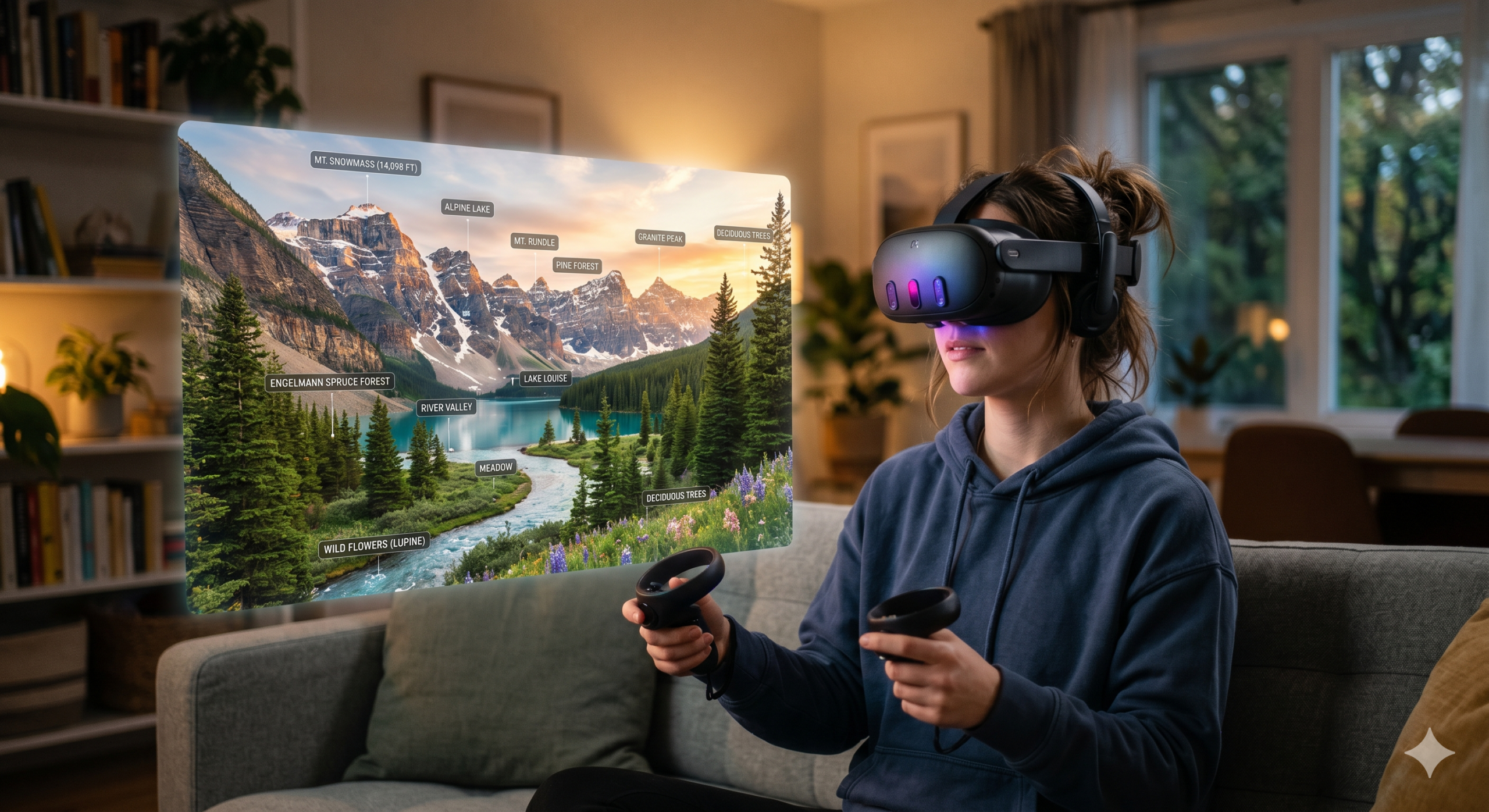
VR and the Extended Mind.
VR and the Extended Mind.
In a world of AI posts, it may seem strange to see one about VR.
This isn’t a throw-back or a reminiscence, though. The idea of using VR in Education has long been something I have found interesting – and, over the past few days, this topic has seemed to have reemerged in my various feeds.
I’ve been listening to/re-reading the book “The Extended Mind” by Annie Murphy Paul, and this has made me think more about VR as an educational tool with great potential.
Computer/Human Interface
When we think about AI (it had to show up), we often view our interactions with AI systems as “us and a computer”. The AI works through a system interface, typically a prompt, to execute tasks. We may automate them via Agentic AI – and increasingly we are directing them via CoWork models, but they remain a fairly static “sit down and work” model.
Enriched Interfaces
Where VR differs (and offers a benefit in my opinion) is that VR provides an enriched interface. Once that more closely mimics working outside of just the computer/keyboard interface.

In “The Extended Mind”, Paul speaks to the ideas around “working outside the brain”. It’s really quite a good book – I recommend it for anyone interested in education and learning.
However, what does this mean in practice? Can we take our students on a “walking lecture”? A field trip to a … field?
We certainly can’t take them to a foreign country to practice speaking a different language. (Well, we “can”, but that’s usually a big trip with lots of planning involved). Here in Canada, we are fortunate to have Quebec and many kids from more English-speaking areas have the chance to visit this more French-speaking part of our country.
VR changes this.
With VR, we “can” take the students “outside” of their heads and into environments that, I believe, can be enriching and valuable. To experience other cultures, practice communication skills, “walk” through a forest, dive into an ocean, travel in time… there are many, many examples.
Of course, VR also supports simulations and experimentation, but can do so much more to get students thinking “outside of their brain”.
My call-to-action for those looking for new, powerful, and intentional ways to support learning is to take a hard look at VR (and read the book by Paul) and avoid becoming myopic about AI.
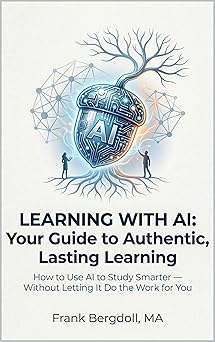
Of course, AI still remains important! (and VR+AI is incredible). For how to learn with AI – I’ve heard there’s a book on that too 🙂 (yeah. That was a shameless plug for my book “Learning with AI”.
What are your thoughts on VR in learning?